





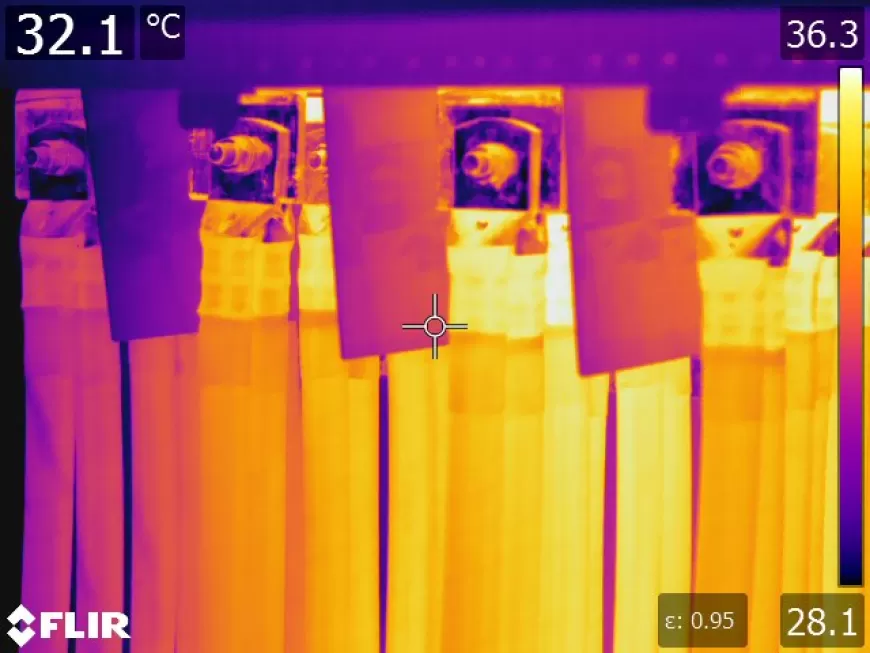


Infrared Thermal imaging analysis of electrical equipment and installations (Electrical Thermal Inspection) is probably the most common application of infrared thermography from many years. It is being used for inspection of both high voltage and low voltage installations. Transformers, over headlines, cabinets, switchgears, busbars, capacitor banks, MDBs, SMDBs, DBs and other electrical equipment’s can be tested using thermography cameras and can avoid catastrophic failures of equipment and fire incidents. Thermography is so useful on electrical equipment’s that it keeps the inspector at safe distance and it does not intrude upon electrical installations. Thermography should be done on live equipment with at least 60% load. Reports can be generated according to a classification criterion as per international standards or it can be generated as per customer’s classification criteria.
How Electrical Thermal Inspection is Done?
Electrical thermal inspection, also known as infrared thermography or thermal imaging, is a technique used to detect and identify potential issues in electrical systems by analyzing the temperature distribution of components and equipment. Here’s how the process is typically carried out:
Equipment Setup
Power-On
Scanning
Image Capture
Analysis
Interpretation
Reporting
It’s worth noting that electrical thermal inspections are often performed by trained professionals who have experience in interpreting thermal images and understanding electrical systems. Regular thermal inspections can help identify potential problems before they lead to equipment failures, malfunctions, or safety hazards.
Looking for Professional Electrical Thermography Services?
Electrical systems constitute the core of industrial activities. A fault in the system may cause interruptions in operations, risks to safety, and costly repair. Electric Thermography provides a proven method to identify problems before they become serious by recognizing abnormal patterns of heat on electrical components.
What Is Electrical Thermography and How Does It Work?
Electrical Thermography employs infrared technology to determine temperature fluctuations within the electrical system. It detects the heat released by components, and transforms it into the form of a visual. This allows you to spot hotspots created due to loose connections, overloading circuits, or insulation issues.
The procedure isn’t invasive and does not need closing down the equipment. This is ideal in industries where constant running is essential. Inspections are carried out without risk while systems are in operation.
Why Is Electrical Thermography Important for Industries?
Undetected electrical faults can escalate quickly. Electrical Thermography assists in preventing these circumstances by delivering early warnings. It can help maintenance personnel initiate corrective measures before the issues develop into more serious problems.
The benefits of this are:
- The early detection of components that are overheated
- Lower danger of electrical fires as well as Failures
- System reliability and performance improved
- Repair and maintenance costs are lower.
This technique also ensures the compliance of the safety requirements. Inspections regularly make sure that electrical systems are operating in safe temperatures.
Where Can Electrical Thermography Be Applied?
Electro thermographic inspections can be used for a wide range of industrial uses. Some of the most popular areas include:
- Distribution panels and switchgear
- Circuit breakers and transformers
- Cable connections and bus bars
- High-voltage electrical equipment
If they can identify the faults within these crucial areas companies can ensure efficient operations, and avoid unplanned shut downs.
A Smarter Approach to Maintenance
Modern industry is moving to prescriptive maintenance. Thermography plays an essential function in this change. It is a reliable method of obtaining data which helps maintenance teams plan their schedules in accordance with the actual condition of equipment and not routine plans.
This method enhances efficiency, minimizes interruptions, and increases overall security. The investment in thermography that is made by professionals assures safe inspections, and the long-term stability of operations.
1. What is Electrical Thermography?
Electrical Thermography is a non-contact inspection technique that uses thermal imaging to analyze temperature patterns in electrical systems and identify potential faults.
2. What are the benefits of Electrical Thermography inspections?
Electrical Thermography helps improve safety, prevent fires, reduce downtime, and detect issues early without interrupting operations.
3. What problems can Electrical Thermography detect?
The technology of Electrical Thermography detects multiple electrical problems which include loose connections and overloaded circuits and insulation failures and overheating components and imbalanced loads.
4. What equipment is used in Electrical Thermography?
Electrical Thermography inspections use advanced thermal imaging cameras capable of capturing real-time infrared images.
5. What industries benefit from Electrical Thermography?
Electrical Thermography provides benefits to manufacturing and power generation and oil & gas operations and commercial facilities.
6. Can Electrical Thermography reduce maintenance costs?
The use of Electrical Thermography enables organizations to predict upcoming maintenance needs which allows them to decrease unplanned downtime and expensive repair work.