







Vibration Analysis Services – CAT I to CAT IV Training & Certification
Every piece of rotating machinery tells a story through vibration. It’s the hum of a motor, the rhythmic spin of a pump shaft, and the subtle tremor of a gearbox—all of which convey signals that can be interpreted as a diagnostic map by the trained ear. Vibration Analysis Services is one of the strongest means in predictive upkeep, enabling industries to identify developing faults and stop pricey breakdowns prior to they even occur.
Unplanned downtime is becoming even more scarce as industrial operations grow more complex. A broken bearing would make an entire production line inoperable, with the misaligned power plant shaft causing huge losses in production. Vibration analysis training, conducted over four internationally recognized competency levels, provides maintenance professionals with knowledge to identify, diagnose and predict failures accurately.
Pro Thermal Imaging LLC offers industry-leading Vibration Analysis and structured programs in Vibration Analysis, CAT I to CAT IV Training. These courses will offer you a straightforward and skills-based way to become an expert in condition monitoring, whether you are a beginner or a seasoned professional.
What Are Vibration Analysis Services?
Vibration Analysis Services are valuable tools used by industries to assess the condition of rotating machinery by measuring vibration waves and interpreting them to detect faults at early stages. These vibration analyses are essential to predictive maintenance and are frequently utilized to help lower downtime, boost reliability and secure workplace safety.
Understanding Machinery Vibration Monitoring
Vibration analysis is a measurement and analysis of the oscillation of parts of machinery in order to diagnose the mechanical condition. Vibration is present as a natural by-product of all rotating machines, including motors, pumps, fans, compressors and gearboxes. With well-maintained parts, these vibrations are within acceptable limits. As errors occur, the vibration signature will shift in a predictable manner that experienced personnel with Vibration Analysis can recognize.
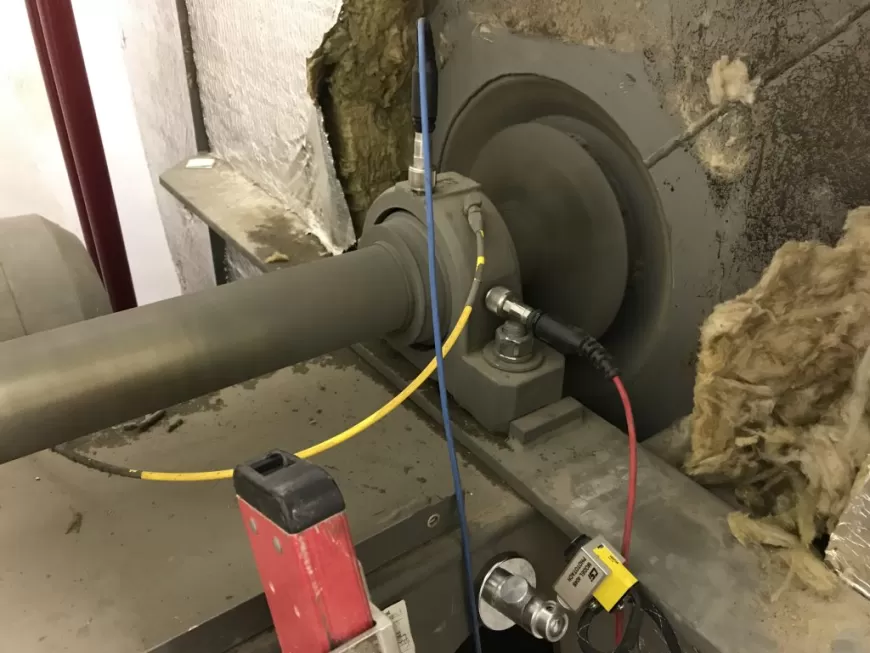
The current vibration monitoring system is based on the installation of accelerometers on the machine housing. These sensors are able to convert mechanical movement into electrical signals, which are translated into time waveforms and frequency spectra. These signals can be examined during a Vibration Analysis Services to identify where faults are occurring, including defects in bearings, gear mesh problems and mechanical looseness.
Vibration Analysis is a field of science that is still evolving. Fault-specific information can also be extracted in noisy industrial environments with the use of advanced techniques like Fast Fourier Transform (FFT), envelope analysis, and cepstrum analysis.
Why Industries Need Vibration Analysis
The value of Vibration Analysis Services is straightforward: it is significantly less expensive to detect a developing fault and schedule a repair than to respond to a catastrophic failure. Unexpected machinery breakdowns can result in lost production, emergency labor, expedited spare parts, and potential safety incidents. In addition to cost savings, Vibration Analysis Services boost the life of equipment. Machines that are monitored and maintained for actual conditions, not factors or fixed time periods, generally exceed expectations and provide
higher reliability.
Another significant benefit of using plants for pest management is their overall plant safety. Mechanical deterioration can be measured and is a precursor to many industrial accidents. Vibration Analysis provides an early-warning system that is systematic and will help prevent sudden and hazardous failure events.
Industries That Use Vibration Analysis
Vibration Analysis Services are used in practically every industry that relies on rotating equipment.
- Motor Current Signature Analysis environments, in which electrical faults are correlated with vibration data.
- Power generation sites that need constant surveillance of turbines and generators.
- Manufacturing facilities in which the reliability of equipment influences the production schedules.
- Heavy-duty machinery is working under extreme mechanical stress in the steel industry.
Vibration Analysis Training: CAT I to CAT IV
Vibration Analysis CAT I through CAT IV Trainings are progressive courses that help to develop progressively from beginner to
intermediate to advanced monitoring and diagnostic skills. The internationally recognised Vibration Analysis CAT 1 to CAT 4 pathway offers professionals a clear progression towards higher levels of competence in Condition Monitoring.
CAT I – Beginner Level Vibration Analyst
The CAT I level is the starting point for vibration professionals and is often referred to as vibration analysis training level 1. The course is based on developing a fundamental understanding of machinery vibration and collecting routine data.
Participants familiarize themselves with the basics of vibration, the types of sensors, and methods for measuring vibration. VCAT-I Vibration Analysis is a qualification that equips entry-level analysts with the knowledge and understanding of common defects such as imbalance, misalignment, looseness, and basic bearing defects.
CAT II – Intermediate Vibration Analysis
The CAT II level moves further than data collection and into deeper levels of interpretation of signals and fault diagnostics. Advanced spectral analysis, harmonics, and sidebands for bearing and gearbox diagnostics will be covered in training.
Participants acquire skills to trend, set up alarms and combine vibration with temperature and lubrication analysis. This level is an essential part of the Vibration Analysis CAT I to CAT IV Trainings.
CAT III – Advanced Reliability & Diagnostics
CAT III is designed for those professionals who are responsible for leading or managing a condition monitoring program. Topics of training are program design, optimization of the routes, handling databases and result monitoring.
Analysts are trained in such scenarios on troubleshooting multiple fault patterns and suggesting precision maintenance, including laser alignment and balancing. This high-level skill enhances the usefulness and practicality of Vibration Analysis Service in an organisation.
CAT IV – Expert Level Vibration Analysis
CAT IV is the highest level of vibration analysis skills. VCAT-IV Vibration Analysis is taught on resonance analysis, advanced signal processing and rotor dynamics.
Participants will learn multi-channel diagnostics skills and explore the most difficult machinery issues. Those who follow the steps are ready to be technical authorities and derive the maximum benefit from the Vibration Analysis Service.
CAT Level Comparison
| Feature | CAT I | CAT II | CAT III | CAT IV |
| Primary Role | Data Collector | Fault Diagnoser | Program Manager | Technical Expert |
| Analysis Depth | Basic | Intermediate | Advanced | Expert |
| Fault Types | Common Defects | Complex Faults | Multi-Fault Scenarios | Dynamic and Resonance Issues |
| Program Management | No | Partial | Yes | Yes |
| Rotor Dynamics | No | No | Partial | Full |
| Reporting | Basic | Detailed | Comprehensive | Advanced |
Benefits of Professional Vibration Analysis Services
Professional Vibration Analysis Services include a lot of operational and financial benefits. These Vibration Analysis enable organizations to cut costs, boost machine reliability, and keep their industrial environments safer.
Early Fault Detection
One of the biggest advantages of using these Vibration Analysis is that their service is able to detect faults before they cause failure. Each defect has its own distinct characteristic signatures; an experienced analyst can identify them.
This early warning allows maintenance teams to prepare for repairs, order parts and plan work without the risk of downtime.
Improve Equipment Reliability
The vibration analysis services minimize reactive maintenance and emergency repairs. By reducing downtime, increasing service life for critical assets and reducing labor costs, planned maintenance is vital.
Businesses using Vibration Analysis leverage enhanced machine availability and reduced repeat failures.
Increase Workplace Safety
Mechanical failure may cause severe hazards such as dangers from projectiles, fire or structures being damaged. Vibration Analysis Services prevent catastrophic failure by identifying deterioration at an early stage, before it becomes dangerous.
Proactive work lets maintenance people avoid emergency repairs and perform them safely and efficiently.
Why Choose Pro Thermal Imaging LLC?
Pro Thermal Imaging LLC brings certified Thermal Knowledge, industrial experience as well as globally consistent Vibration Analysis training courses together in one spot. The company can provide the organizations with advanced Vibration Analysis and internationally recognized certifications.
The team comprises qualified condition monitoring clocked professionals in power generation, manufacturing, steel and process industries. They are taught by instructors who recognize practical case studies and real-life experience in diagnosis.
Training is available onsite and online, making Vibration Analysis Services and professional education accessible to organizations worldwide. Participants have practical experience with advanced instruments, software and sensor technologies.
Pro Thermal Imaging LLC is your trusted partner when it’s time to create an industry-leading condition monitoring program. Contact the team today to learn how their Vibration Analysis can reduce downtime, improve reliability, and strengthen your maintenance program.
FAQs
What are the top Pro Thermal Imaging services?
• Thermal imaging camera
• Electrical Thermography
• FLIR thermal imaging cameras
• Optical Gas Imaging Cameras
• Furnace Thermography
• ITC Infrared Thermography and OGI trainings
• acoustic imaging for air & gas leak detection
• solar panels drone thermography inspection